

.png)

Features
Supporting Local Plan Consultations in the UK: From Regulation 18 to Regulation 19
Preparing a Local Plan in the UK is a long, complex, and highly scrutinised process. From early vision-setting to testing legal compliance and soundness, planning teams must balance statutory requirements with meaningful public engagement, all while working under tight timelines and limited resources.
Konveio is purpose-built to support this reality. Designed to work with the tools and formats planning teams already rely on, Konveio strengthens every stage of the Local Plan process, particularly the statutory consultation periods under Regulation 18 and Regulation 19, without requiring change management, new workflows, or complex setup.
Watch the video below for a short walkthrough showing how this works in practice.
Regulation 18: Early, Flexible, and Inclusive Engagement
Regulation 18 consultations are about exploration. At this stage, local authorities are gathering high-level feedback on issues, objectives, spatial options, and emerging policies. Engagement needs to be open, accessible, and flexible, often blending in-person workshops with online participation.
Konveio excels here by making it easy to replicate traditional workshops online. Using a simple page builder, planning teams can recreate the structure and flow of in-person events as a self-guided digital experience. This might include an introductory welcome video, an intake survey, topic-based sections, and a clear outline of next steps. This mirrors the agenda of a physical workshop while allowing people to participate on their own time.
.jpg)
For feedback, Konveio supports a wide range of early-stage engagement tools. Poster boards used at open houses can be uploaded directly, with participants adding comments in context. Sticky notes, threaded discussions, image galleries, and polls support brainstorming and high-level dialogue without forcing participants into long, linear surveys. The result is more natural, higher-quality feedback that reflects how people already engage in workshops.
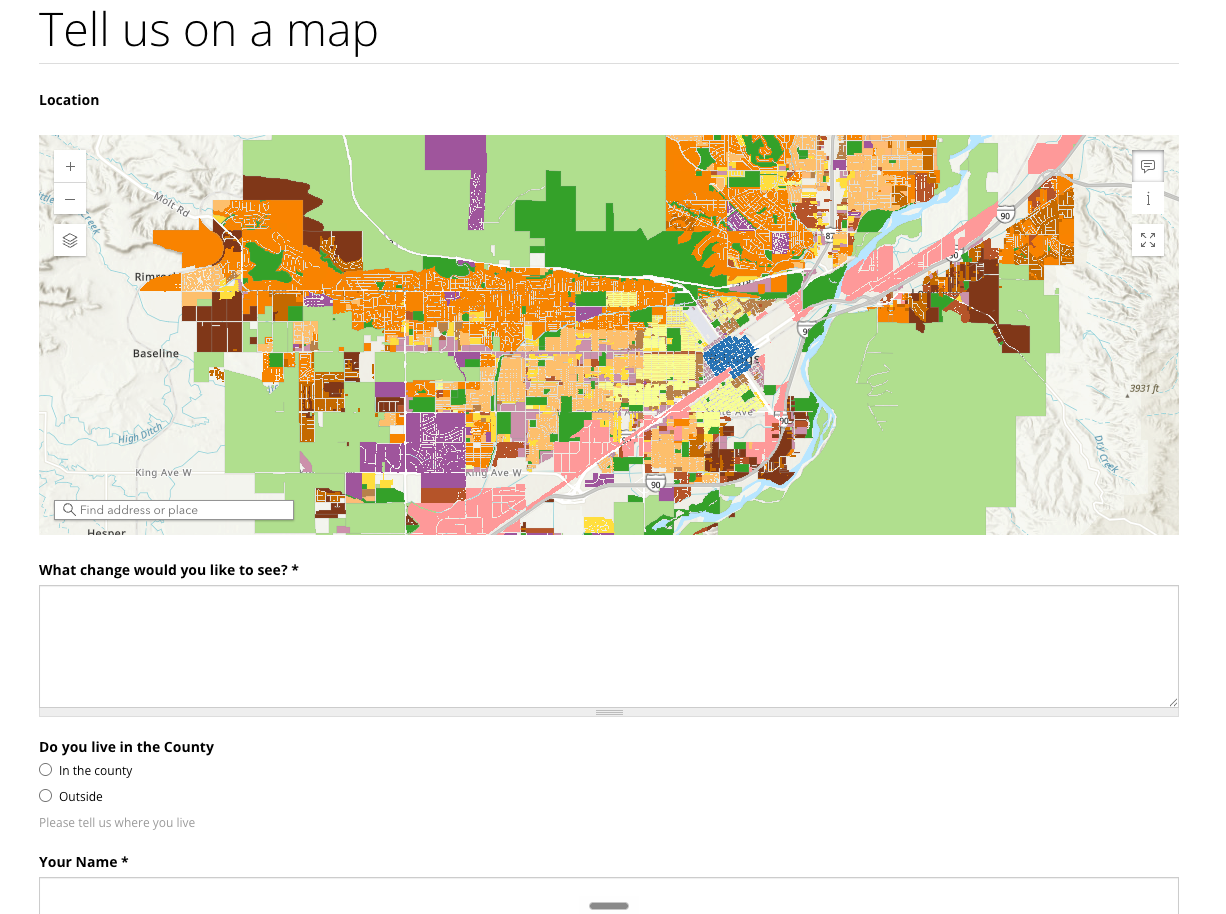
Mapping is another cornerstone of Regulation 18 engagement, and Konveio integrates seamlessly with ArcGIS Online and tools like Vu.City. Existing maps are embedded with their full layer structure, legends, and styling intact without duplication or rework. Participants can click directly on locations to leave comments, with attributes such as site names or IDs automatically captured. This means feedback is spatially precise and immediately usable, without requiring additional GIS analysis.
.jpg)
Early policy options are also easily supported. Konveio publishes existing PDFs exactly as they are with no reformatting required, while adding layers of clarity through interactive summaries, built-in glossaries, and direct links to key sections. People can skim at a high level, dive into detail where needed, and comment directly where it matters most.
.jpg)
Regulation 19: Structured, Defensible, and Efficient Feedback
By the time a Local Plan reaches Regulation 19, the focus shifts and the process becomes far more formal and exacting. Feedback must now test legal compliance and soundness, often policy by policy, paragraph by paragraph. Traditionally, this has meant long, cumbersome forms and significant staff time spent disentangling responses. Konveio transforms this experience for both consultees and planning teams.
At the start, consultees provide basic information, such as organisation type or representation, before reading the plan in an interactive document viewer. Feedback is then collected directly in context, tied to specific policies or mapped locations. For each commentable section, Konveio structures responses around the statutory tests: whether a policy is legally compliant, whether it is sound, why it may not be, and what modifications are suggested. Supporting evidence can be uploaded where required.
This same structured approach applies to spatial policies. Comments left on the policy map follow the same soundness and compliance logic as text-based policies, ensuring consistency across the plan. At the end of the process, an exit survey captures overarching views, such as whether the plan is justified overall or whether the respondent wishes to participate in examination hearings, bringing the full Regulation 19 submission together in one coherent workflow.
.jpg)
Making Sense of Feedback with AI
Collecting feedback is only half the challenge. Analysing it efficiently and defensibly is where many teams struggle. Konveio’s AI-powered analysis tools are designed specifically for planning consultations. Long comments are automatically summarised into clear bullet points. Feedback is tagged using categories defined by the project team, based on previous consultations or known priorities, providing a consistent first pass that staff can review and refine.
Comments are then grouped into themes by document section, policy, or tag, with sentiment analysis highlighting areas of concern or support. At any point during the consultation, teams can generate reports to understand emerging issues early, not just at the end. All outputs can be exported to Word, PDF, CSV, or JSON, providing a strong foundation for officer reports, statements of consultation, and examination preparation. These tools support officer judgement rather than replace it, providing a structured first pass that teams remain fully in control of.
Across both Regulation 18 and Regulation 19, Konveio’s core promise holds true: there is no need to change how you work. Planning teams continue drafting and publishing in PDF, continue using ArcGIS Online, and continue running in-person events where appropriate. Konveio simply connects these existing pieces into a single, coherent engagement and analysis platform. The result is better-informed participants, more structured and defensible feedback, less staff time spent on manual analysis, and a Local Plan process that is clearer, more inclusive, and easier to manage from start to finish.


Similar posts



Explore a live example


