

.png)

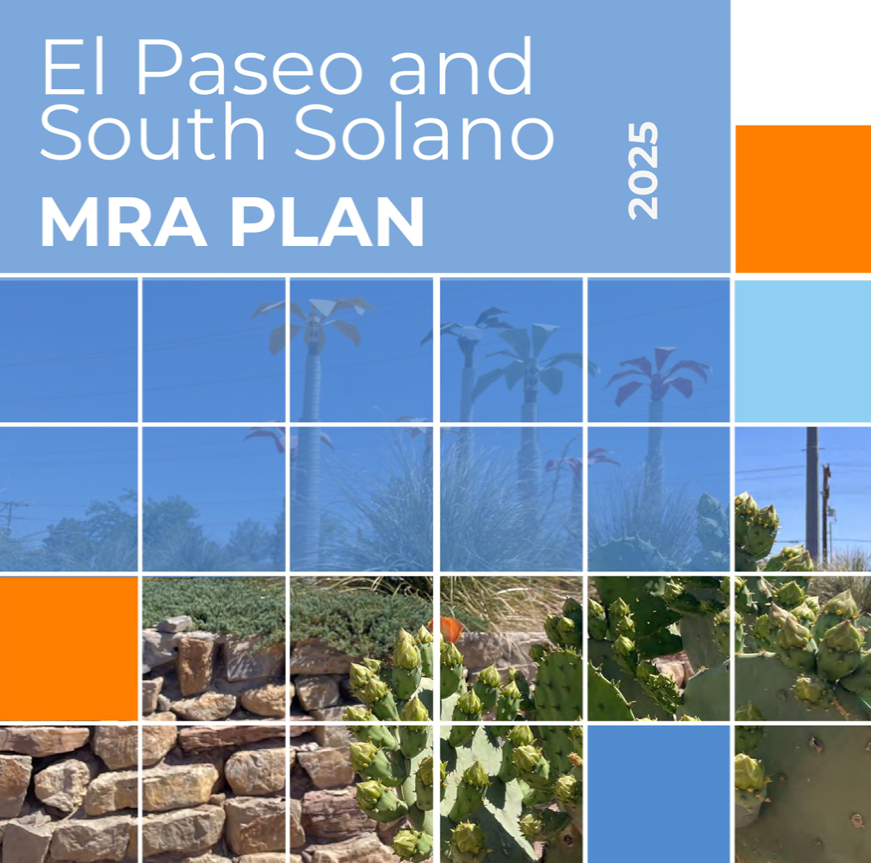
The City of Las Cruces, New Mexico, launched the El Paseo and S Solano MRA Plan to revitalize a key corridor connecting downtown Las Cruces and New Mexico State University. Working closely with community partners and residents, the Sites Southwest project team implemented an inclusive engagement strategy designed to reach a diverse population—including students, seniors, and lower-income households.
To make the draft redevelopment plan accessible and transparent, the team used Konveio to share the document online, enabling residents to easily navigate the plan, search for topics of interest, and leave targeted feedback.
Adopted in July 2025, the plan reflects extensive community input and provides the City with new tools to guide redevelopment, infrastructure improvements, and economic investment in the corridor.
Challenge
The El Paseo South Solano MRA area covers nearly three square miles and includes a diverse mix of residents and stakeholders. The project team identified several key engagement challenges early in the process:
- A significant portion of residents are lower-income households, which can limit availability for traditional evening meetings.
- Many residents are students or seniors, with varying schedules and transportation access.
- Approximately 43% of households primarily speak Spanish, requiring bilingual engagement.
- The community had experienced multiple planning efforts over the past two decades, leading to skepticism about whether new plans would lead to real change.
To ensure the redevelopment plan truly reflected the community’s priorities, the City and project team needed an outreach strategy capable of reaching residents where they already were—both physically and digitally.
Solution
Sites Southwest implemented a multi-channel engagement strategy designed to reduce participation barriers and reach residents across the corridor.
Targeted Community Outreach
Early engagement focused on connecting directly with community stakeholders, including local residents, students, local businesses, and community organizations.
Workshops with students at Las Cruces High School and Las Montanas Charter High School invited participants to take part in a mini design charrette exploring ideas for streetscape improvements, public art, and green space redevelopment. These student-generated ideas were later shared during broader community workshops, ensuring youth perspectives were incorporated into the planning process and visible to city leadership.
Creative Outreach Strategies
To reach residents who might not attend traditional meetings, the team partnered with local organizations to distribute project information through everyday community touchpoints. Flyers were included in food box distributions organized by a local church and food pantry, and bilingual materials directed residents to a community survey and project website.
The outreach effort also extended to the local public transit system, where flyers were placed inside buses serving the corridor. These strategies helped the project team reach residents who might otherwise have been missed through traditional engagement methods.
The survey campaign generated more than 3,000 responses, with the majority coming from residents living within the redevelopment area.
Digital Plan Review with Konveio
When the draft redevelopment plan was ready for public review, the team used Konveio to present the document online through the project’s webpage.
The platform allowed residents to navigate the plan chapter by chapter, search for keywords related to issues they cared about, and leave comments directly within the document. As one project team member explained, “We really liked the keyword search feature. If someone was interested in walkability or bikeability, they could easily search that and find where we address that within the plan.”
Impact
The engagement strategy resulted in strong community participation and helped build trust around the redevelopment process.
The extensive outreach campaign generated thousands of survey responses and informed the development of a draft plan that reflected community priorities. Once the draft was shared, Konveio helped extend participation by allowing residents to review and comment on the plan at their own pace.
The platform also streamlined the reporting process for the project team. Staff were able to export and organize community comments and incorporate them into presentations for City Council work sessions and public hearings, clearly demonstrating how public input shaped revisions to the plan.
When the plan came before the City Council for adoption, residents spoke in support of specific improvements, including safer bicycle and pedestrian infrastructure—highlighting how community voices had directly influenced the final recommendations.
Adopted in July 2025, the El Paseo and S Solano MRA Plan provides the City of Las Cruces with new redevelopment tools and funding mechanisms to guide future investments in mobility, safety, and neighborhood revitalization.
Similar case studies
Explore a live example


